Stains that return after certain storms
A mark that appears only during wind-driven rain may point to a different detail than one that shows up during a long steady rain. Note the weather pattern and the room location before the inspection.

Axis Roof & Gutter · Residential roof repair
Roof damage is not always a replacement decision. When a leak or loose detail is limited to one area, a careful inspection can show what failed, what is still sound, and whether a focused repair makes sense.
Pinpoint the failure, define the repair area, and understand what happens if hidden damage appears.
A good repair scope starts with the failure, not a preset solution.
The best repair candidates have a clear problem area, workable access, and surrounding roof materials that can be integrated without creating another weak seam.
Axis Roof & Gutter works with homeowners who are dealing with active leaks, loose roofing, worn details, or damage concentrated in one part of the roof. The evaluation should connect the symptom to a cause before the work area is set.
Covington roofs often have to manage repeated wet weather, shaded areas, and debris from nearby trees. When a leak appears, the inspection should look beyond the obvious spot and include valleys, penetrations, wall connections, and roof-edge drainage where water can concentrate.
Pay attention to patterns, not just dramatic damage
Some roof problems arrive gradually. A new stain, one loose flashing edge, or a few damaged shingles can be enough reason to investigate if the condition has changed from what you normally see.
A mark that appears only during wind-driven rain may point to a different detail than one that shows up during a long steady rain. Note the weather pattern and the room location before the inspection.
Localized shingle damage may stay a repair if the nearby roof is still sound. If the same wear appears across the slope, a contractor may need to discuss a larger roofing solution.
Flashing protects some of the busiest water paths on a roof. When a wall connection, vent, chimney, or skylight detail opens, the leak may show up well away from that exterior location.
If one gutter section suddenly overflows or debris keeps collecting in the same valley, check the roof above it. Drainage changes can expose a weak edge, flashing detail, or worn surface that was not obvious before.
Treat the indoor mark as evidence, not the diagnosis. The roof surface may be only one part of the problem. Nearby flashing, sheathing, drainage, and attic moisture conditions can change both the diagnosis and the final scope.
Decide by condition, not by the size of the stain
Repair is not only about how small the damage looks. The surrounding roof must also be stable enough to open, integrate, and reseal without creating another failure next to the work.
| Decision point | Conditions that support a repair | When broader work may be smarter |
|---|---|---|
| Extent of the affected area | The failure is concentrated in a defined spot that can be opened and restored without disrupting multiple roof areas. | Damage extends beyond the original leak area or crosses more than one roofing transition. |
| Roof condition around the repair | The roofing around the failure still has the flexibility and strength needed for a clean repair tie-in. | The repair area is surrounded by worn roofing that may crack, tear, or fail when disturbed. |
| Leak behavior | The leak can be connected to a specific exterior condition that matches the interior evidence. | The moisture pattern changes, spreads, or has persisted after multiple repairs in different locations. |
| Expected outcome | The finished area can be integrated without leaving an obvious weak detail directly beside the new work. | The work would fix one symptom while obvious wear or damaged details remain within the same roof area. |
Different roofs need different repair details
Repair details should come from the roof system in front of you. Shingles, metal panels, penetrations, and flashing each need compatible materials and methods so the repaired area can shed water with the rest of the roof.
On an asphalt roof, the repair may involve a few shingles or a larger cut-in around a roof feature. What matters is preserving the shingle laps, fastener placement, and underlayment connection as the affected area is rebuilt.
Worth checking: New shingles can look different beside material that has been exposed for years. The repair still needs correct fastening and water-shedding details even when the visual match is not perfect.
A metal roof repair begins by identifying the panel type and the detail that is allowing water through. Fasteners, seams, wall transitions, and penetrations each behave differently, so the fix needs to match that specific assembly.
Worth checking: Adding more sealant is not a complete repair when the real failure is movement, attachment, or flashing. The underlying detail needs to be corrected so the same seam does not reopen.
Is the problem at a porch, addition, or low-slope transition? Leaks near an addition may start where the main roof connects to a lower-slope surface. That junction deserves its own inspection because fixing only the visible roof covering can miss the transition detail.
The failed detail may involve more than the roof surface
A leak can begin at one exterior detail and show up somewhere else indoors. Before work starts, understand which roof components are part of that path and which ones will be opened during the repair.
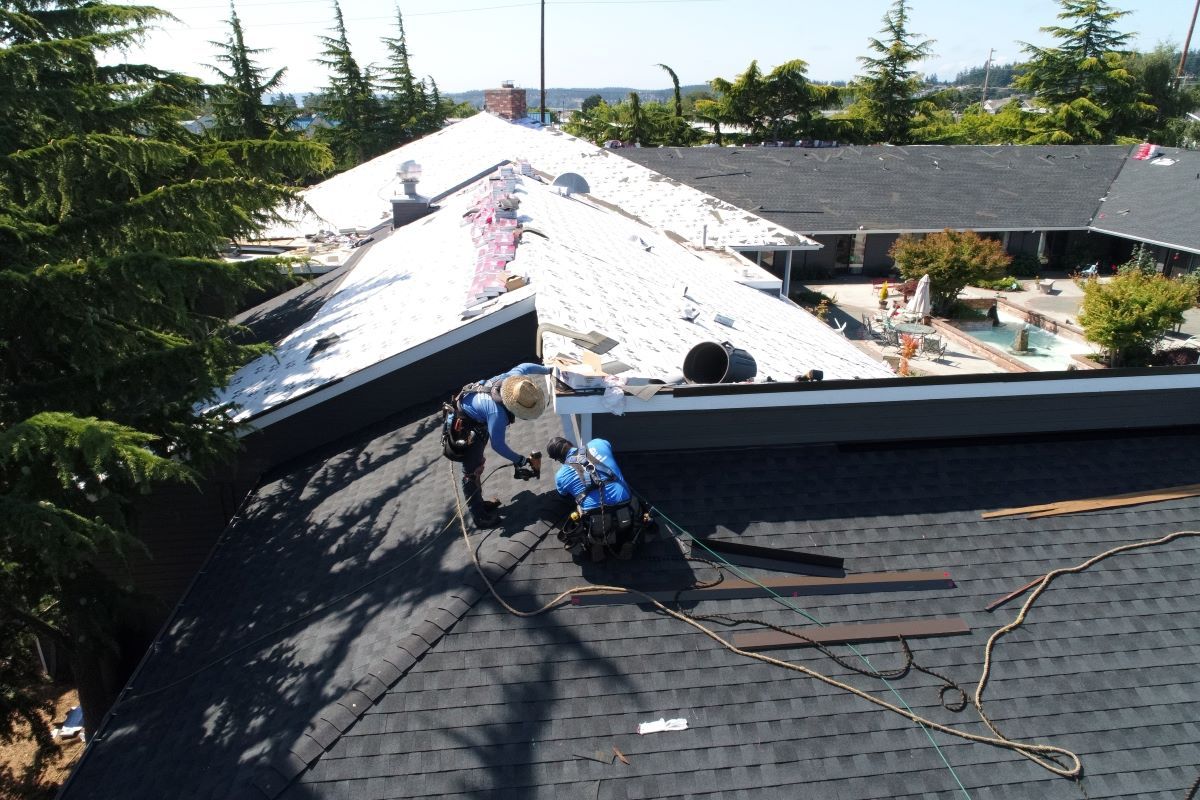
Check the material beside the leak as carefully as the damaged piece itself. A repair depends on having sound roofing around the opening so the new work can connect without stressing worn material.
The condition below the roof surface is not always known until the area is opened. If the deck or underlayment has been affected, the repair should address that before new roofing is installed over it.
Water-shedding details around penetrations rely on the right sequence of metal and roofing materials. A repair should restore those layers so water continues over the roof instead of behind the flashing.
Condensation can create staining that resembles a roof leak. If the weather pattern and roof evidence do not match the interior mark, review attic airflow and moisture conditions as part of the diagnosis.
Water speeds up where roof planes meet and can back up when debris slows the exit path. Check valleys, lower roof edges, and nearby gutters when a leak appears in one of those high-flow areas.
Know what happens before, during, and after the repair
A roof repair is easier to evaluate when the contractor explains how the source will be identified, what the written scope covers, and what happens if hidden damage appears once materials are removed.
Share the timing of the leak, the rooms affected, and any earlier repair history. The roof inspection can then focus on exterior details that match those interior clues.
Review what the estimate includes and excludes, especially decking, underlayment, and flashing that cannot be fully seen yet. Ask how extra work will be documented before it is added.
Once the area is protected, the repair can be opened and rebuilt according to the written scope. Weather matters because roofing layers need suitable conditions for safe handling and proper sealing.
At the end, review the repaired section, site cleanup, and any changes from the estimate. Know who to contact if the same symptom returns during later wet weather.
A little preparation helps: Clear access to the affected side of the home when possible, move fragile items away from the work zone, and point out interior leak locations before the crew begins.
Repair cost follows the amount and difficulty of the work
The cost of a roof repair follows the actual scope. Roof height, pitch, material type, flashing complexity, and hidden deck damage can all change the amount of labor and material required after the problem area is opened.
Two repair prices can represent very different scopes. Make sure each proposal explains what is being removed, what is being replaced, how the new work connects to the old roof, and what happens if hidden damage is found.
Request My Roof Repair Estimate
GAF Master Elite®️
residential roofing contractor
In GAF’s residential contractor directory, Axis is listed as a Master Elite contractor with a President’s Club distinction.
Check Axis’s GAF contractor listingAsk questions that cover the whole repair area
Axis Roof & Gutter works on residential roof repairs, replacements, gutters, and related exterior needs. When the problem is close to a roof edge or water-control detail, it helps to look at how those components interact rather than treating each one in isolation.
A useful proposal names the problem and the repair area in plain language. It should also explain what happens if the crew discovers damaged decking, flashing, or other conditions that were not visible during the first inspection.
Manufacturer credentials may affect product or warranty options for qualifying work. Repair coverage can be different from full-roof coverage, so read the written terms attached to the exact scope being proposed.
View the Axis roofing galleryThink about shade, runoff, and the roof details that hold water longest
Covington roof problems can be influenced by tree cover, shaded areas, roof pitch, and the route runoff takes during long wet periods. A useful repair plan considers those site conditions instead of relying on the interior stain location alone.
Shaded sections can stay damp longer after a storm, and penetrations in those areas may be harder to evaluate from the ground. Check flashing, seal locations, and nearby roofing before assuming the first visible defect is the source.
When runoff from several roof areas reaches one valley or gutter section, a small obstruction can change the path of water. Check those high-flow areas when the leak is close to an eave or interior exterior wall.
Side-yard width, fences, landscaping, and roof height affect how a crew reaches the damaged area. A quick access review before the appointment can prevent surprises when ladders and material handling are planned.
Questions worth asking before the roof is opened
Roof repair decisions are easier when you understand the source, the condition around it, and the limits of the estimate. Use these questions to compare the repair scope before work begins.
Roof repair questions: 360-653-7663The decision comes from the failure and the surrounding roof. If the source is identifiable and nearby shingles, panels, and flashing can support new work, a focused repair may be reasonable. Widespread wear or repeated leaks can change that recommendation.
Roof height, slope, installed roofing, the location of the leak, and hidden moisture damage can all change pricing. Ask what the estimate includes and how any added deck or flashing work would be documented before it is performed.
A limited shingle repair may work when the surrounding roof is still flexible and properly attached. If opening the area causes neighboring shingles to crack or reveals broader wear, the scope may need to change.
Once water gets below the roof covering, gravity and framing can move it sideways before it becomes visible. Inspectors use the stain location as one clue and then compare it with roof details that could feed that path.
Flashing belongs in the scope when the leak path or repair area involves that transition. Some existing flashing can remain serviceable, but damaged or poorly installed pieces may need replacement or rebuilding.
It can be useful. A clogged or overflowing gutter can hold water near the roof edge and make existing weaknesses more noticeable. Check the eave, drip edge, fascia area, and nearby roofing when the leak is close to that perimeter.
The contractor should stop and show or document the condition when practical, then explain what needs to change in the scope. Your estimate should state how added deck work is authorized and priced before it becomes part of the repair.
Ask what is covered by the contractor and what, if anything, is covered by the product manufacturer for the materials used. The answer should be specific to the repair you are buying, not general full-roof language.
Start by calling 360-653-7663 or submit the online estimate request. Include the room or roof area involved, when the issue occurs, and whether anyone has repaired the spot before. Clear history gives the roofing team a better starting point for the inspection.
Start with a repair scope you can understand
If a Covington roof leak or damaged detail is causing concern, begin with an estimate that explains the likely source and the work needed to correct it. Clear scope comes before the repair itself.


