Interior water marks after rain
Water can travel along framing or decking before it drops into the room below. The visible stain is a starting point, not a reliable map of the opening above.

Axis Roof & Gutter · Roof leak and repair service
When water shows up indoors, the opening on the roof may be somewhere else. A useful repair starts with diagnosis, then looks at the condition around the failure before any patching begins.
Trace the water path first. Then decide what can be repaired without leaving the next weak spot behind.
Separate a repairable failure from a roof-wide condition.
A repair should solve an identifiable problem while leaving the rest of the roof undisturbed. That depends on both the failed detail and the condition next to it.
Axis Roof & Gutter handles residential roof repair along with larger roofing work. For a repair, the useful question is not simply where the stain is, but which roof component failed and how far the damage extends.
Everett weather can send rain across roof surfaces and into vulnerable transitions around walls, penetrations, edges, and valleys. A repair estimate should explain both the failed detail and the surrounding roof condition so the homeowner understands why that repair area was chosen.
Notice what changes after rain, wind, or roof debris
A roof can show trouble through water marks, loose materials, or changes in drainage. Checking the area early gives the contractor a better chance to isolate the failure before moisture affects more components.
Water can travel along framing or decking before it drops into the room below. The visible stain is a starting point, not a reliable map of the opening above.
A limited shingle problem can be repairable, but the condition of the neighboring courses matters. Repeated lifting, cracking, or widespread wear changes the repair decision.
A small opening at a wall or penetration can admit a surprising amount of water in the right weather. The repair should restore the layered flashing detail rather than simply cover the surface.
Granules, leaf buildup, and water spilling over a familiar gutter line can reveal a change on the roof. The issue may be drainage, surface wear, or a damaged detail near the eave.
Do not assume the leak source sits directly above the stain. The inspection should connect indoor evidence with the roof surface and the details around it. That is how a contractor avoids repairing the wrong spot while the real entry point stays open.
Choose a focused repair only when the roof can support it
The right scope depends on both the damaged area and the roof beside it. If the contractor cannot create a durable tie-in, a small patch may not be the most sensible option.
| Part of the repair decision | What favors a targeted repair | What can point to a larger roofing plan |
|---|---|---|
| Where the damage starts and stops | The source sits within a specific section where the contractor can work without chasing damage across several slopes. | The leak is only one symptom of wear or damage seen across a larger portion of the roof. |
| Surrounding roof life | The existing roof next to the damage is still serviceable and can support the new work without breaking down. | The contractor would have to tie new work into roofing that is already weak, unstable, or repeatedly leaking. |
| Pattern of water entry | There is a clear relationship between the leak and one roof component or damaged section. | Leaks recur in more than one place or the roof has a history of repeated patching without a stable result. |
| What the finished work should accomplish | The proposed work addresses the known source while preserving serviceable roofing around it. | The patch would be temporary because nearby roof conditions are already showing the same type of failure. |
Match the repair to the installed roof system
The same leak can require very different work on a shingle roof and a metal roof. The contractor should choose the repair method around the installed system instead of using one generic patch for every surface.
Repairing shingles is more than sliding a new piece into an empty spot. The contractor may need to lift surrounding courses, check the deck, and rebuild the overlap so water continues to move over the roof rather than beneath it.
Worth checking: Expect some visual difference when fresh material meets older shingles. A clean tie-in and correct installation matter more than making a repair disappear from every viewing angle.
Localized damage on metal roofing may involve the panel, the connection between panels, or a transition around another roof feature. The repair should follow the system design and preserve drainage across the metal surface.
Worth checking: Metal repairs should not rely on coating over an unresolved joint or flashing problem. Correct the cause, then use compatible sealants where the system calls for them.
Pay attention to low-slope tie-ins and roof transitions. Changes in roof pitch create busy drainage points. When the leak is near a transition, make sure the contractor checks the connection, flashing, and water flow before pricing a surface-only repair.
A leak is often a path, not a single hole
A good repair scope follows water from the exterior entry point toward the interior evidence. That approach helps separate the damaged component from nearby parts of the roof that are still working.
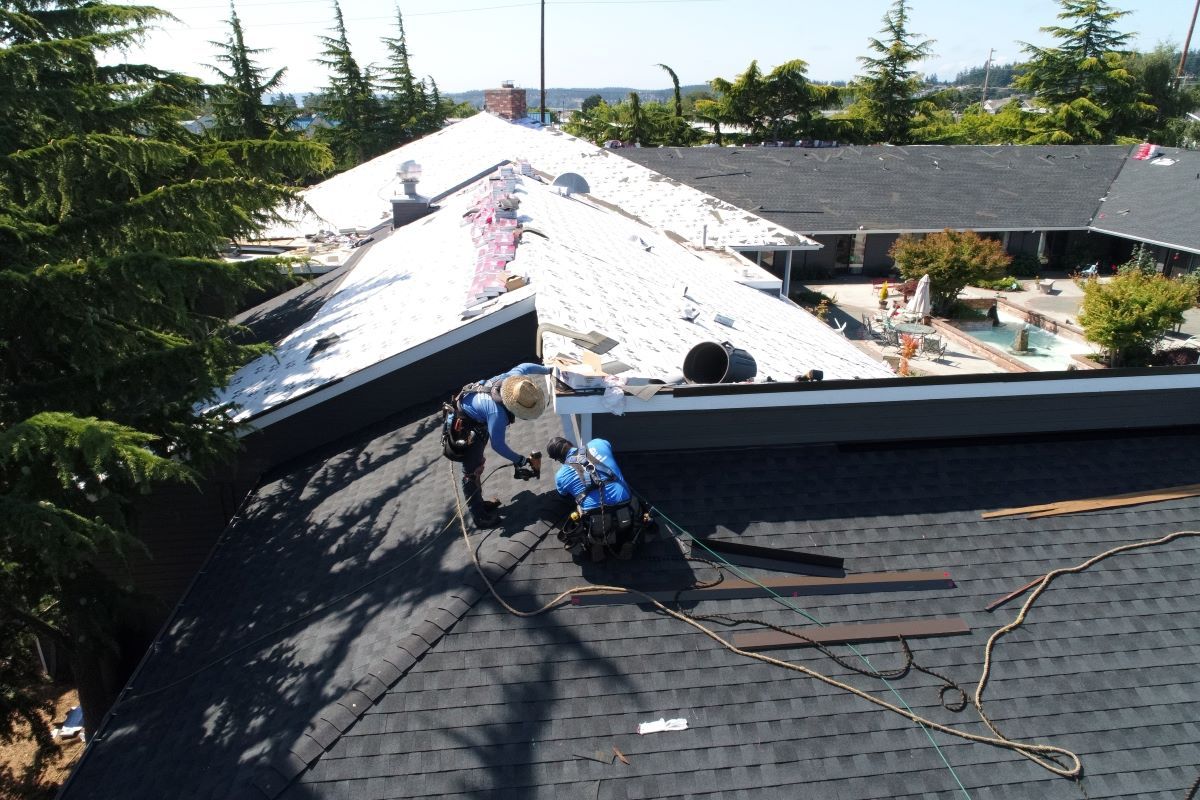
Repair work needs a dependable border. If shingles, panels, or flashings around the problem are loose or fragile, the contractor may have to expand the area to reach material that can hold the new work.
A leak that has been active for a while may have affected layers below the visible roofing. The repair process should include a clear plan for damaged sheathing or underlayment if those conditions are uncovered.
The repair at a penetration should work with gravity and the roofing courses. Rebuilding the flashing path is usually more dependable than covering a failed transition with extra sealant.
If staining appears without a clear relationship to rainfall, the inspection may need to include attic ventilation and condensation. That helps avoid repairing roofing that was not actually leaking.
The amount of water moving through a valley or over an eave can expose small defects quickly. Check for debris, edge damage, or drainage problems that may be keeping water around the repair area.
Use a simple process to keep the repair scope clear
Knowing the sequence helps homeowners compare estimates and avoid surprises. The basic steps are diagnosis, scope, repair, and a final review of the completed area.
Tell the roofing team when the problem happens and where it shows up inside. Matching that information with roof features above can shorten the path to a useful diagnosis.
Before work begins, confirm the repair boundaries, materials, cleanup expectations, and the procedure for unexpected conditions. Clear scope language reduces surprises once the roof is open.
After setup and protection, the contractor removes the affected material, addresses the failed detail, and ties the new work into the surrounding roof. Safe, dry working conditions are part of that process.
Before closing the job, understand what was repaired and whether anything nearby still needs monitoring. The next stretch of rain can provide useful confirmation that the original water path has been corrected.
Help make the work area easier to access: Keep driveways, gates, and side access available where possible, move items that sit below the repair zone, and make sure the team can see the interior location connected to the leak.
Know what the estimate is really accounting for
Roof repair cost is tied to difficulty and scope. A small leak near a complicated wall or penetration may require more careful work than a larger but easy-to-reach shingle area.
Read the description beside the number. The estimate should explain the failed detail, the materials being installed, the work area, and how additional damage would be handled if the crew finds more than expected.
Request My Roof Repair Estimate
GAF Master Elite®️
residential roofing contractor
GAF’s residential contractor listing identifies Axis as a Master Elite contractor and notes a President’s Club distinction.
See Axis’s GAF contractor credentialsBring roof, flashing, and drainage concerns into one scope
Axis Roof & Gutter handles roof repair alongside residential replacement, gutter, and exterior work. That matters when the source is near an eave or transition where roof materials and drainage components meet.
Ask enough questions that the repair does not feel like a mystery. The scope should connect the symptom to a cause and explain how the finished work restores the water-shedding path.
Manufacturer certification does not replace the need to review the repair paperwork. Confirm what written coverage applies to the new materials and the contractor work included in your specific scope.
Visit the Axis project galleryWind-driven rain can test roof transitions from more than one direction
Everett homes can see rain from changing directions, so wall intersections, roof edges, and other transitions may be tested differently from one storm to the next. The repair should follow the actual water path on that roof rather than a generic leak pattern.
Rain pushed by wind can reach sidewalls, step flashing, vents, and eaves from angles that straight rainfall does not. Those transitions deserve attention when the leak appears only in certain storms.
Overflow at the eave can keep water close to fascia, decking edges, and adjoining roof materials. When interior moisture is near an outside wall, include the roof-to-gutter connection in the diagnosis.
Some repair areas require setup near tight side yards, garages, or neighboring structures. Confirm access in advance so the crew can plan ladders, debris control, and protection for the ground below.
What homeowners usually want to know first
Before approving a repair, it helps to know how the source is found, what can make the scope larger, and how the finished work connects to the existing roof. These FAQs cover those basics.
Talk with Axis: 360-653-7663A repair may be enough when the damaged detail is clear, the surrounding roof still has useful life, and the new work can be integrated without creating another weak point. The stain size by itself is not enough to make that call.
Repair cost follows the scope, not just the size of the stain. A hard-to-reach leak near a wall or penetration can require more detail work than an open-field shingle repair, and hidden damage can also add to the final scope.
Localized shingle damage can often be repaired, but the contractor needs enough serviceable material around it to create a dependable tie-in. Widespread brittleness or repeated failures may point to a larger solution.
The water path can bend around framing or travel along the underside of the roof deck. A stain tells you where water became visible, not necessarily where it first crossed the roof surface.
Flashing does not automatically need replacement on every repair. Its condition, shape, attachment, and relationship to the leak determine whether it can stay or needs to be rebuilt with the repaired area.
Gutters carry water away from the eaves, so overflow or poor drainage can affect the roof edge. When a repair is near that area, inspect both the roofing detail and the path water takes into the gutter.
It can. Some conditions cannot be confirmed until materials are removed. A clear proposal should explain how concealed decking or underlayment damage is reported and how changes are approved before extra work proceeds.
Ask for the terms in writing and make sure they match the repair scope. Find out what applies to workmanship, which new materials are covered, how long the written terms apply, and what exclusions or maintenance responsibilities are listed.
Call Axis at 360-653-7663 or use the online estimate form. Describe where the water shows up, which storms seem to trigger it, and any earlier repairs or roof changes you know about. That information helps the team prepare for the evaluation.
Move from a roof symptom to a clear repair plan
If you are dealing with a leak or localized damage in Everett, begin with a roof evaluation that connects the symptom to a likely cause. From there, the repair scope can be built around the affected area.


