A roof that fits the house beneath it

Roofing Contractor in Gig Harbor, WA

Your roof has more to do than look good from the driveway. Talk with Axis Roof and Gutter about repairs, replacement materials, and the connections that keep water moving off your home.

Asphalt shingles or metal. An existing leak or a planned update. Get the details into the conversation.

GAF Master Elite®️ A GAF roofing certification
Shingle and metal systems Two approaches to discuss
Free project estimates Begin with your home's needs

More than a material choice

Residential Roofing Contractor in Gig Harbor, WA

A roof is a collection of connected parts. Replacing the covering or repairing a leak should account for the places where those parts meet, not just the largest visible surface.

Axis Roof and Gutter offers residential roof repair and replacement, with asphalt shingle and metal installation options. Gutter and exterior services are also available. That lets you raise related concerns during the same conversation, while confirming exactly which work belongs in your estimate.

Perhaps you are weighing a different roof appearance, dealing with a leak beside an addition, or trying to decide what can be retained. Explain that goal first. The recommendation should relate to your roof's slope, condition, and connections rather than a standard package that overlooks the house beneath it.

Roofing professional assessing the condition of a residential roof
A closer assessment helps separate material choices from necessary repairs.

Pay attention to the connections

Roof Concerns That Deserve a Closer Look

A roof can look largely intact and still have a problem at one connection. Other roofs show wear well beyond a single detail. The location and spread of the damage should guide the next conversation.

Moisture where roof planes meet

Valleys and transitions carry water across changes in the roof's shape. A leak associated with one of these areas calls for a review of that connection and the adjoining covering, not an assumption that all materials have failed.

Deterioration across the covering

When shingles crack, curl, or lose substantial granules over several areas, there may be more to address than one repair. Ask how the remaining covering compares with the visibly affected portions.

Leaks beside a skylight or wall

An opening in the roof needs flashing that works with the surrounding assembly. Before replacing a skylight or a large area of roofing, establish whether the concern involves the component itself, its flashing, or nearby materials.

Problems persisting after earlier work

Past repairs are useful evidence. Describe what was changed and whether the symptoms improved. A recurring issue may need a different detail, while broader material decline may justify reconsidering the overall roofing plan.

Appearance does not settle the diagnosis. A weathered-looking roof and a leaking roof are not necessarily the same problem. Have the condition and the water-entry concern assessed before deciding how much work is appropriate.

Retain what is still serviceable

Can Your Roof Be Repaired, or Is Replacement Needed?

Repair and replacement are not interchangeable recommendations. The decision should explain what can remain, what cannot be reliably repaired, and how new work will connect to the existing home.

Consider the connections and remaining materials before choosing the project scope.
Part of the decision A focused correction may fit A new assembly may fit
The leak detail One flashing or transition can be corrected while nearby roofing remains sound. Defects involve enough of the assembly that isolated corrections leave major problems.
Condition of the covering The material around the work can remain in use and accept a suitable connection. Widespread breakdown limits how effectively new work can join to old material.
Roof sections involved The concern belongs to a defined section with serviceable areas around it. Several sections require work and the overall roof condition supports replacement.
Reason for the project Correcting a specific defect achieves the needed result without changing the whole roof. A worn system needs renewal, making material selection part of a larger replacement plan.

Start with the roof's design

Shingle and Metal Options for a New Roof

Samples help you picture the finished house, but the installation details determine what is being proposed. Ask about the selected product, fastening approach, and treatment of every roof transition before settling on the look.

A layered look with a choice of colors

Architectural asphalt shingles

The dimensional surface of architectural shingles can work with a range of exterior finishes. When comparing products, look at construction, performance information, and warranty conditions as well as color. The proposed shingle should be suitable for the roof area where it will be used.

  • Compare a sample beside your siding and trim.
  • Ask how roof edges and valleys will be finished.
  • Identify the complete product assembly in writing.

Before settling on a shingle: Check which supporting materials are part of the estimate. Similar-looking roofs can involve different underlayment, accessory, and flashing choices.

Defined lines and coordinated components

Metal panels and their roof details

A metal roof should be selected as an assembly, not simply as a sheet color. The panel profile, finish, attachments, and flashing need to suit the geometry of the house. Discuss how valleys, penetrations, and changes in slope will be incorporated into that system.

  • Review the profile and fastening arrangement.
  • Ask how the assembly allows thermal movement.
  • Understand care expectations for the chosen finish.

Pay attention at transitions: Where panels meet a wall, opening, or another roof area, the proposed details need to belong to that system rather than an unrelated installation approach.

A porch roof may not suit the same covering. Lower-slope areas deserve a separate suitability check. Ask how the estimate treats each section and how dissimilar assemblies, if needed, will connect without leaving an undefined part of the project.

Look where the components meet

Roofing Details to Settle Before Work Begins

For repairs or replacement, get a clear explanation of what happens at the affected connections. Some conditions are visible during an assessment; others can only be resolved after the existing material is opened up.

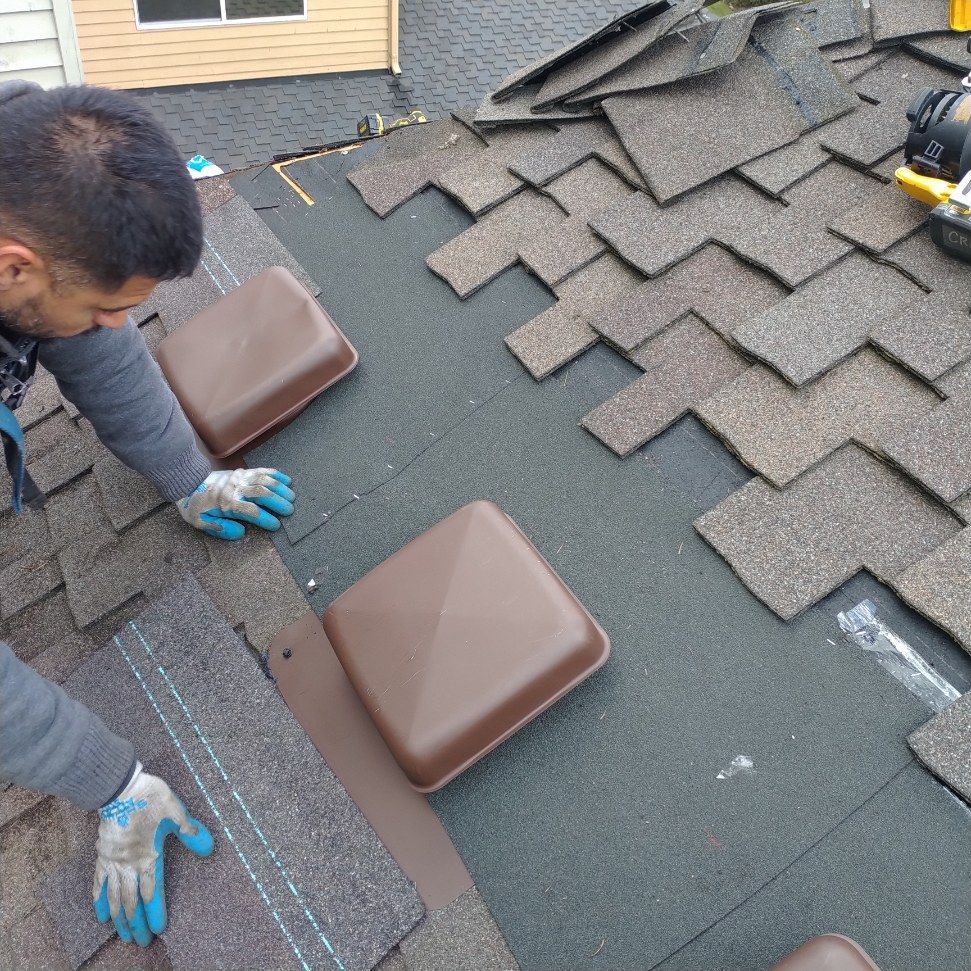
Installation work on an asphalt shingle roof
  1. The base beneath the roofing

    Decking supports the roof covering, but its full condition may not be visible beforehand. Establish how any unsuitable areas found during removal will be addressed and approved.

  2. Layers below the finished surface

    Identify the underlayment and protection specified for the work. Their use should correspond to the roof area, selected covering, and applicable installation requirements rather than appearance.

  3. Walls, skylights, and roof openings

    Discuss each affected interruption separately. New roofing does not automatically mean every adjoining component is being replaced, so the scope should distinguish retained items from renewed flashing.

  4. Intake and exhaust working together

    Ask how the existing attic and ventilation arrangement relate to the project. Different ceiling layouts and roof sections can make a one-size-fits-all vent recommendation inappropriate.

  5. The route into the gutters

    Valley exits, roof edges, and gutters need to work together. Review the condition of those connections and whether any gutter work is separate from the roofing proposal.

Give the project a clear scope

Your Roofing Project, from Assessment to Completion

You may arrive with a material preference or just a problem to solve. Either is a useful starting point. These stages keep the conversation tied to the house and the work being proposed.

  1. STEP 01

    Describe the result you need

    Explain the leak, visible wear, or planned roof update. Share any past work involving additions, skylights, or gutters so relevant connections are included in the discussion.

  2. STEP 02

    Compare the assemblies

    Discuss repairs or replacement materials in relation to the findings. Review included details, retained components, and coverage terms before deciding on the proposed scope.

  3. STEP 03

    Set up the property

    Agree on access, storage, delivery locations, and work-area protection. Ask how weather or conditions uncovered during the job will affect sequencing and communication.

  4. STEP 04

    Review the result together

    Match the completed work to the agreed scope and resolve remaining questions. Retain the product information, applicable warranty documents, and recommendations for caring for the finished roof.

Think about access early: A place for deliveries is not necessarily a place for debris containers. Discuss both, along with vehicles, outdoor furniture, and safe routes for your household during the work.

Compare the details behind the total

How a Gig Harbor Roofing Project Is Priced

Roofing costs reflect both the amount of material and the details needed to fit it to the house. Two roof areas of similar size can involve very different work if one has more valleys, openings, height, or difficult access.

Request a proposal that makes the boundaries clear. Which roof sections are included? What happens around a skylight? Is gutter work separate? Those answers are more useful than comparing broad allowances that do not describe the finished installation.

Request a Project-Specific Estimate
Shape and access
Multiple slopes, roof height, and working access affect how much labor is involved beyond the measured area.
Selected assembly
Panels or shingles, supporting layers, attachments, and finishing components contribute to the installed scope.
Materials being removed
Existing roof layers and decking condition influence removal and repair needs. Clarify how additional work is authorized.
Openings and junctions
Chimneys, skylights, and changes in roof direction require defined details rather than a covering-only allowance.
Adjoining exterior work
Any gutter or related exterior work should be identified clearly, with its inclusion or exclusion stated in the estimate.
Written project terms
Review applicable approvals, disposal, exclusions, and product or workmanship coverage before comparing final prices.

GAF Master Elite®️
residential roofing credential

GAF recognizes Axis Roof and Gutter with its Master Elite certification and a President's Club distinction.

See Axis's certification with GAF

Ask about the roof as a whole

Roofing and Exterior Services from Axis

A roof concern does not always end at the shingle or panel edge. Axis provides roof repair, residential replacement, and gutter and exterior services, giving you a way to discuss connected work without assuming every item must be replaced.

Use that conversation to establish priorities. A necessary leak correction, a material upgrade, and an optional adjoining improvement are different decisions. Your estimate should make their relationship clear so you can understand what the proposed project is intended to accomplish.

The GAF credential is a useful point to verify, but your contract still determines the work and coverage you receive. Ask for the particular warranty offered on the selected system and read its qualifications before making a decision.

View the Axis roofing gallery

Roof runoff matters in Gig Harbor

Consider the Water Path Around Your Gig Harbor Home

Gig Harbor's stormwater guidance identifies roofs as a source of runoff. For a roofing project, that is a practical reason to discuss the path from the covering through valleys and gutters, rather than treating the roof edge as the end of the assessment.

Where roof areas converge

Point out places where multiple slopes feed the same valley or edge. Ask how those details will be handled and whether the gutter connection needs attention as part of the work.

The conditions around the house

A roof shaded by nearby trees can present different maintenance concerns from an open roof. Describe recurring debris collection and ask what care the proposed assembly will need at those locations.

A plan for adjoining work

Identify porches, additions, and exterior components that meet the roofing. Agree on the boundary of the job so related work is discussed beforehand instead of assumed to be included.

Questions about the finished system

Gig Harbor Homeowner Roofing FAQs

Material comparisons are only part of choosing roofing work. These questions help clarify connections, retained components, and the information that belongs in your estimate.

Ask a roofing question: 360-653-7663
Is metal roofing suitable for every part of a house?

Not every panel system fits every roof area. Slope, roof geometry, fastening requirements, and transitions all affect suitability. Have the proposed system reviewed against the actual house, including porches and additions. A material that suits the main roof may not be the right assembly for another section.

Can a skylight leak be repaired without replacing the roof?

It may be possible when the problem is limited to the skylight connection and surrounding roofing is serviceable. The assessment should distinguish flashing trouble from a failing skylight or more extensive roof deterioration. That distinction determines whether a focused correction can reasonably address the concern.

Will a new roof include new flashing everywhere?

Do not assume so. Ask the estimate to identify the flashing being replaced, repaired, or retained at each relevant wall, chimney, and opening. The proposal should also explain how the new covering will connect to any component that stays, including a skylight or adjoining roof section.

Can different sections of my home need different roofing?

Yes. A lower-slope porch or addition may need a different assembly from a steeper main roof. The reason should come from the design and product requirements, not a general preference. Have the connection between those sections described so neither assembly is treated as an isolated surface.

Do I need to choose shingle colors before requesting an estimate?

No. You can begin by discussing the roof's condition and the work it needs. Once the scope is clearer, compare suitable products and colors against the existing exterior. Material preferences are helpful, but they should not take the place of evaluating the roof and its details.

How should roof runoff affect the project discussion?

Ask how water moves from the roof slopes into valleys, across the edge, and into the gutters. Identify any existing overflow or troublesome connections. Roof work and gutter work should be distinguished in the proposal, with related concerns addressed rather than presumed to disappear under a new covering.

What maintenance should I discuss for a new roof?

Request care guidance for the actual shingle or metal system being proposed. Ask about debris-prone areas, gutters, roof openings, and any product-specific requirements. The useful answer depends on the assembly and property conditions, so avoid assuming one maintenance routine applies unchanged to every roof.

Does the same warranty apply to shingles and metal?

Coverage varies by product, installation, and contract. Do not transfer a warranty description from one system to another. Compare the written manufacturer terms and any separate workmanship coverage for the options under consideration, including exclusions, eligibility, and responsibilities for registration or ongoing care.

Where do I start with a Gig Harbor roofing estimate?

Discuss your plans at 360-653-7663, or contact Axis for a free estimate. Provide the Gig Harbor property address and explain the roof concern, material interest, or related gutter issue. Existing project information can help make the first conversation more specific.

Bring the details into focus

Plan a Roof Project That Makes Sense for Your Home

Talk through your Gig Harbor roof, the areas that need attention, and the materials you are considering. Axis Roof and Gutter offers free estimates to help you take the next step.