Moisture in the attic or near the ceiling
Fresh dampness may follow rafters, sheathing, or insulation before it reaches finished surfaces. The interior location is helpful, but it should be matched with evidence on the roof.

Axis Roof & Gutter · Local roof repair
A small roof problem can stay small when the source is found early. Start with the damaged area, follow the water path, and check the nearby shingles, flashing, and decking before choosing the fix.
Start with the cause, not the stain. Build the repair around the roof that is actually there.
Repair the problem that is there, not the one you assume is there.
Roof repair is most useful when the damaged section can be isolated and the nearby shingles, panels, flashing, and deck still provide a stable base for the repair.
Homeowners call Axis Roof & Gutter for problems such as missing shingles, roof leaks, damaged metal details, and trouble around penetrations. The repair conversation starts by separating the affected area from the parts of the roof that are still performing normally.
Maple Valley properties often combine tree cover, shade, and complex roof lines that can keep valleys and gutters working hard during wet periods. A useful repair plan should show where the failure starts and whether adjacent materials can be tied into without opening more roof than necessary.
Early clues can keep a repair from becoming a larger project
Roof repairs often begin with a small clue rather than a dramatic failure. The condition around that clue helps show whether the work can stay localized or needs a broader plan.
Fresh dampness may follow rafters, sheathing, or insulation before it reaches finished surfaces. The interior location is helpful, but it should be matched with evidence on the roof.
One damaged cluster does not automatically mean the whole roof needs replacement. The key is whether nearby shingles can be lifted, fastened, and sealed without breaking down around the repair.
Roof penetrations and wall intersections need a continuous water-shedding path. Loose metal, failed seals, or poor overlaps can make an otherwise serviceable roof leak.
Tree debris can hold water in valleys, behind roof features, or near gutter lines. When runoff stops moving normally, a small roofing weakness can stay wet longer and become easier for water to exploit.
A small interior spot can come from a larger exterior water path. A repair decision should consider what is visible on top of the roof and what may be happening below it. Deck condition, water movement, flashing, and ventilation all help complete the picture.
A repair needs sound material around the failure
A repair can remain limited when the failure is clear and the neighboring roof is dependable. Widespread wear, repeated leaks, or brittle materials may point to work beyond the original spot.
| What the contractor should evaluate | When localized work may be reasonable | When the issue may extend beyond a repair |
|---|---|---|
| Size and reach of the failure | The damaged section can be isolated and accessed without removing large amounts of roofing that are still performing well. | The affected area spreads through multiple roof sections or includes several connected weak points. |
| Quality of the tie-in area | Adjacent materials are stable enough to lift, fasten, overlap, or seal as the repair method requires. | Nearby roof components have too much age or deterioration to create a dependable transition into the repair. |
| Can the water source be isolated? | The contractor can follow the water path to one primary failure that can be addressed directly. | There are several possible entry points and no single repair area explains the full pattern. |
| Condition after the repair | Correcting the damaged section should restore a continuous path for water to move off the roof. | Limiting the scope would leave connected failures, deteriorated materials, or repeated leak paths unresolved. |
The repair method should fit the existing material
A durable repair respects the existing roof assembly. Before work begins, identify the roofing material, how it is attached, what lies below it, and which nearby details have to be opened to reach the failure.
A localized shingle repair often means working backward through the courses until the damaged area can be reached cleanly. The nearby shingles must be in good enough condition to handle that work and accept the replacement material.
Worth checking: Replacement shingles may not blend perfectly with a weathered roof. The key performance question is whether the new section is properly integrated and sealed into serviceable surrounding courses.
Metal roofing expands and contracts, which makes movement part of the diagnosis. A useful repair looks at fasteners, panel seams, flashings, and penetrations together instead of treating every leak as a sealant problem.
Worth checking: A bead of sealant cannot compensate for every metal roof problem. If the panel connection or flashing geometry has failed, the repair should address that condition first.
Check junctions between different roof assemblies. A leak beside a porch or addition may involve the connection between roof systems rather than either roof field by itself. The repair scope should identify how those surfaces are supposed to overlap and drain.
Follow the repair through every layer it touches
The roof covering is only the outer layer. A repair may also involve underlayment, decking, flashing, ventilation, or drainage, so the diagnosis should explain how those pieces relate to the failure.
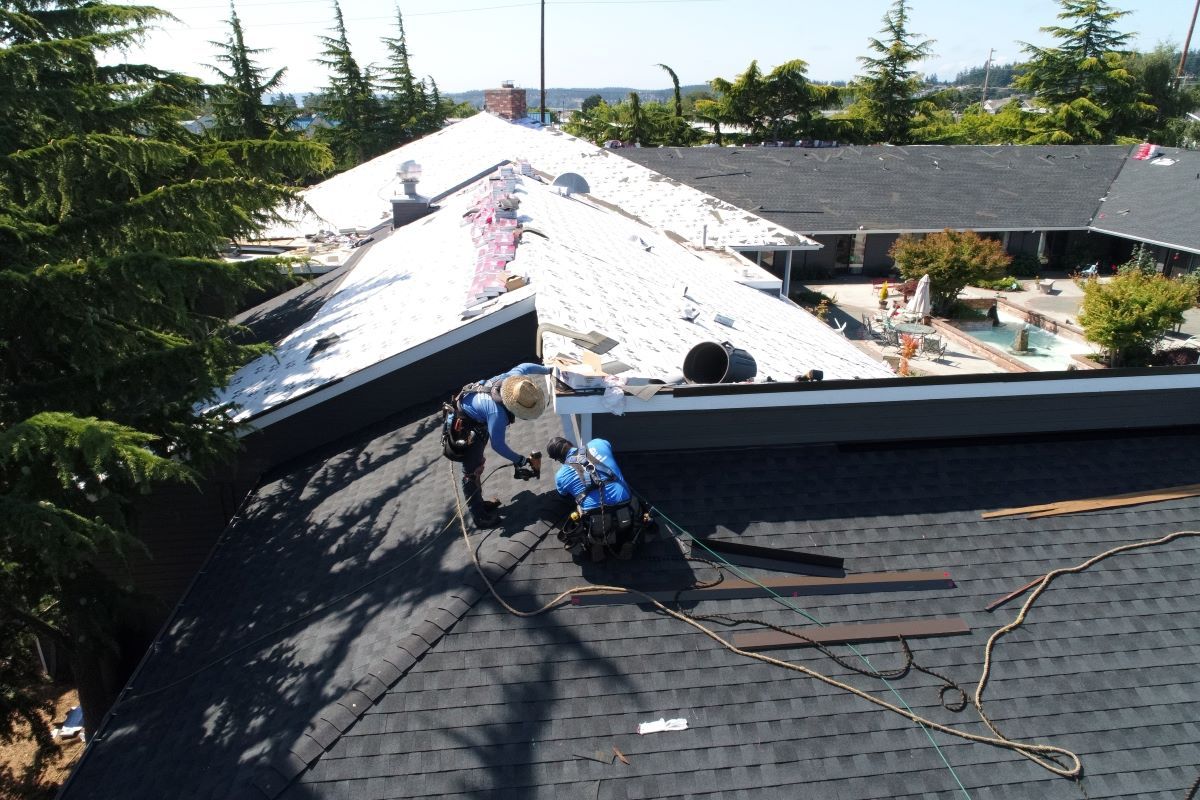
A replacement shingle or panel only works as well as the roof it connects to. The tie-in area should be stable, properly attached, and free of deterioration that would undermine the repair.
Hidden moisture can change a small surface repair. Ask how the contractor will handle soft decking, compromised underlayment, or other concealed damage if it appears during the work.
Roof interruptions need carefully integrated flashing. If a leak comes from a wall or penetration, the repair should correct the overlap and connection details that keep water moving outward.
A repair should not be sold before the moisture source is understood. In some cases, attic humidity or condensation can create dampness even when the roof covering is not the entry point.
Tree debris and heavy runoff can stress valleys and eaves. A repair near those areas should include the drainage path so the new work is not left next to the condition that helped create the leak.
The repair should follow a diagnosis, not a guess
A solid process keeps a small roof problem from turning into vague open-ended work. Start with evidence, agree on the repair area, complete the work, and review what changed before the job is closed.
Start with what you know: the stain location, recent weather, missing material, or visible roof change. The inspection should use those clues to identify the area most likely to have failed.
A written scope should describe the repair in enough detail that you know what is being opened and restored. It should also explain the approval process if hidden damage changes the plan.
Repair work should keep the opening controlled, protect landscaping and access areas, and use materials compatible with the existing roof. The crew may need to adjust timing if the roof cannot be safely opened in wet weather.
A final review should cover the work completed, any hidden conditions that changed the scope, and what to watch for afterward. Keep any photos, invoices, or written coverage with your home records.
Before the crew sets up: Give the crew room for ladders and debris control, protect or move items directly below the work area, and show any attic or ceiling evidence that may help confirm the leak path.
Scope, access, and hidden damage can all change pricing
A repair estimate reflects more than the number of damaged shingles. Access, roof layout, the installed material, concealed moisture, and the details around the leak can all expand or simplify the work.
A useful estimate should tell you what problem the contractor intends to solve. If flashing, deck condition, or the tie-in method is missing from the scope, a low price may not be an apples-to-apples comparison.
Request My Roof Repair Estimate
GAF Master Elite®️
residential roofing contractor
Axis appears in GAF’s residential contractor directory as a Master Elite contractor and is shown with a President’s Club distinction.
Review the Axis GAF listingMake sure the estimate explains more than the surface patch
Roof repair is one part of the residential roofing and exterior work offered by Axis Roof & Gutter. If water is entering near a transition, gutter line, or adjoining exterior detail, the evaluation can consider the connected components around that area.
The estimate should make the repair easy to picture: what comes off, what gets replaced, how the surrounding roof is protected, and how additional work is handled if the opening reveals more damage.
Certification is useful context, but the repair proposal still needs its own clear coverage terms. Ask what applies to the products installed and the workmanship performed on the repaired area.
See completed work in the Axis galleryTree cover and drainage can change where a roof problem shows up
Maple Valley properties often have a mix of roof geometry and nearby trees that can place extra debris in valleys and gutters. The repair should account for where water concentrates and whether shade is keeping the affected area damp longer.
Leaves and needles can collect where roof planes meet and at the lower edge of the roof. Clearing the path can expose damaged materials and help show whether slow drainage contributed to the leak.
Shade does not automatically mean a roof problem, but it can keep leaves and organic debris damp for longer. That makes regular visual checks around valleys, penetrations, and gutters especially useful.
Wooded lots and established landscaping can limit the easiest approach to the roof. Identify safe ladder locations and protect plants or outdoor items that sit below the repair zone.
Common repair questions from homeowners
A good repair conversation covers more than the leak itself. Homeowners should understand the tie-in area, possible hidden damage, material differences, and what to expect once the roof is opened.
Call Axis with a repair question: 360-653-7663Localized damage can often stay a repair when the contractor can reach the failure and connect new work to sound materials on every side. The inspection should also rule out broader deterioration that would make the repair temporary.
The visible damage is only one cost factor. Access, roof geometry, shingle or metal repair methods, flashing details, and concealed deck conditions can change the amount of work after the area is opened.
A few missing shingles do not automatically mean a new roof. The key question is whether the surrounding courses are sound enough for the replacement shingles to be fastened, lapped, and sealed correctly.
Yes. Moisture can follow rafters, sheathing, nail lines, or insulation, so the ceiling mark may be several feet from the exterior entry point. Tracing both interior and exterior clues helps narrow it down.
Sometimes. The contractor should inspect how the flashing overlaps the roof and whether it can be tied back in after materials are removed. If it is damaged, loose, or part of the failure, correction may be necessary.
Blocked valleys and gutters can redirect runoff or keep water in contact with vulnerable details longer than intended. Clearing drainage does not replace a roof repair, but it can be part of understanding why the area started leaking.
Wet or deteriorated sheathing cannot simply be covered back up if it will not support the roofing properly. Ask how the contractor documents concealed damage and how you approve any added replacement before the roof is closed.
Not necessarily. A localized repair can have different coverage from a complete roof installation. Read the proposal and any written terms so you understand what applies to workmanship, new materials, exclusions, and responsibilities.
You can call 360-653-7663 or request a free estimate online. Explain the visible damage, interior stain location, timing, and any previous work in that area. Even a few practical details can help narrow the first roof inspection.
Get the leak narrowed down before it spreads
For a Maple Valley roof concern, start by identifying the leak path and the condition around it. Axis can evaluate the problem and outline a repair scope based on what the roof actually needs.


