A ceiling mark grows after wet weather
If a stain darkens after rain or comes back in the same area, document the timing. Water can travel along framing or sheathing, so the indoor mark may be some distance from the point where it entered.

Start with what the roof is actually telling you
A leak after a long stretch of rain, lifted shingles, or overflowing roof edges can point to very different problems. Axis Roof and Gutter helps homeowners narrow down the cause before deciding how much work makes sense.
Roof repairs, replacement planning, shingles, metal roofing, and gutter concerns can all start with one careful look at the existing roof.
A practical place to begin
The useful question is not simply whether a roof is old. It is whether the present condition can be corrected in a focused area or whether wear has spread far enough to justify a larger project.
Axis Roof and Gutter works on residential roofing, repairs, gutters, and exterior components. Share the details you have noticed, including where staining appears, whether shingles have moved, and what previous repairs were attempted. Those clues help shape a more useful assessment.
Rainwater has to move from the roof to the property drainage system. Renton manages surface-water infrastructure, while Fairwood is in unincorporated King County. For a homeowner, the immediate roofing question is simpler: are valleys, eaves, flashing, and gutters carrying water away from the house as intended?

Clues that deserve a closer look
Roof problems do not always begin with an obvious leak. Small changes inside the house or along the roofline can show that a detail is no longer handling weather the way it should.
If a stain darkens after rain or comes back in the same area, document the timing. Water can travel along framing or sheathing, so the indoor mark may be some distance from the point where it entered.
Shingle wear can be concentrated around one slope or spread across the roof. The amount of surrounding material that is still serviceable matters when deciding whether a repair can be tied in cleanly.
A leak beside a vent, chimney, sidewall, or skylight can involve flashing and transition details. The surrounding roof should be reviewed before anyone assumes the field shingles are the only issue.
A repeat leak is a reason to revisit the source, not automatically repeat the same patch. The next assessment should account for what was repaired before and what may have been left unchanged.
Write down what happens when it rains. Note the room, the weather, any dripping or staining, and previous work in that area. A short history can help the roofer focus on the right part of the system.
Use the condition to set the scope
A fair comparison looks at how much of the roof is affected, how well new work can connect to existing materials, and what concerns would remain after the proposed work.
| What the assessment shows | When a focused repair may fit | When broader replacement may fit |
|---|---|---|
| Extent of the affected area | The problem can be traced to one connection, penetration, edge, or limited section of roofing. | Wear or damage is appearing across multiple slopes or in several unrelated areas. |
| Condition around the repair | Nearby roofing is stable enough to integrate new materials without disturbing a much larger area. | Surrounding materials are brittle, worn, or otherwise difficult to work into a dependable repair. |
| History of past work | The cause of a previous leak can be identified and corrected without reopening large portions of the roof. | Multiple repair locations or recurring failures point to a roof that may be reaching the limit of spot work. |
| Condition that would remain | The rest of the roof is performing well enough that leaving it in place is a reasonable choice. | A repair would leave widespread deterioration or other known concerns untouched. |
Choose the system after the roof is understood
Axis installs asphalt shingle and metal roofing. The right choice depends on roof shape, appearance, detailing, and the complete installation specification, not just the material name on an estimate.
Architectural shingles can suit many sloped homes and offer a broad range of colors and profiles. Ask which product line, accessory package, and installation details are included so you can compare complete systems instead of sample boards.
The roof details still matter: Valleys, sidewalls, pipe openings, and eaves need planned transitions. A good proposal should explain those areas instead of treating the roof as one uninterrupted surface.
A metal roof brings different connection and movement considerations than shingles. Panel profile, fastening, finish, penetrations, and transitions should be discussed in relation to the shape and slope of the house.
One installation detail to discuss: Metal expands and contracts as temperatures change. The attachment and seam design should be appropriate for the selected panel system and the way the roof is laid out.
Have a porch, addition, or lower-slope section? A roof can contain more than one slope condition. Ask whether those areas need a different assembly and how the transition will be integrated with the main roofing system.
Look past the surface material
Shingles or panels are the visible layer, but the recommended work may also depend on decking, underlayment, flashing, ventilation, and drainage details. Some conditions are not fully visible until materials are removed.
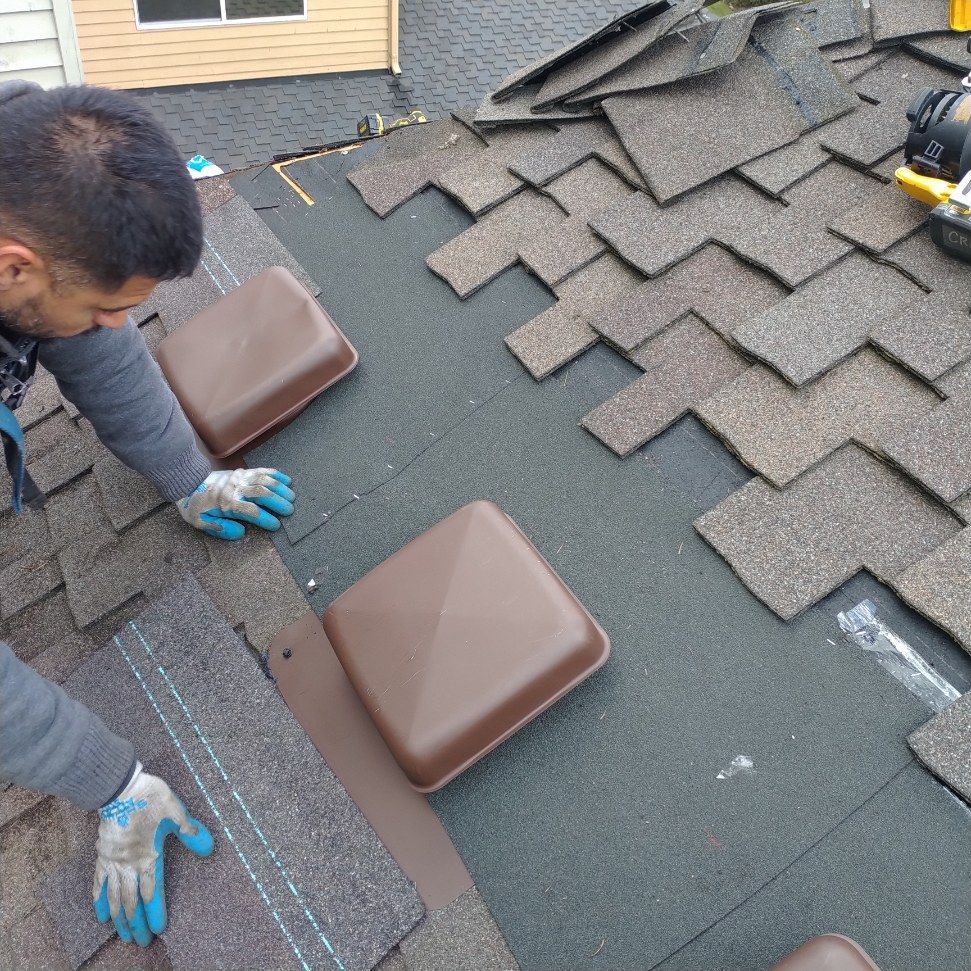
Soft, deteriorated, or damaged sheathing may not be obvious from the exterior. Ask how any decking discovered during removal will be documented, approved, and added to the scope.
The proposal should identify the underlayment and any additional water-shedding layers included. These components work with the roof covering and should not be treated as an unnamed extra.
Walls, chimneys, vents, and other openings interrupt the roof surface. Ask which flashing details are being replaced, reused, or corrected as part of the planned work.
Attic airflow depends on a balance between intake and exhaust. A roofing assessment should consider the existing layout before recommending changes to vents.
Rain should have a clear route from the upper roof to valleys, edges, and gutters. If debris or overflow is part of the problem, the proposal should distinguish maintenance from actual roof repair.
A clear process makes decisions easier
The exact work varies between a small repair and a full roof project, but homeowners should still be able to follow how the concern was evaluated, what is included, and what happens if hidden conditions appear.
Share where the issue appears, when it happens, and any repair history. Photos or notes from wet weather can be useful context for the assessment.
Ask what will be removed, what will be installed, which adjoining details are included, and how changes would be approved if concealed damage is uncovered.
Talk through driveway use, material delivery, noise, pets, landscaping, and weather-related schedule changes so the household knows what to expect on work days.
After the work, confirm the agreed scope was addressed and collect the project documents that apply to the materials and workmanship.
Plan for normal job-site disruption: Roofing work can affect driveways, walkways, yards, and indoor routines. Ask in advance which areas need to stay clear and how debris and cleanup will be handled.
Understand the pieces behind the total
Roofing prices change with the amount of material being disturbed, the difficulty of reaching the work, and the details that must be rebuilt around the affected area. A small repair and a full replacement are different scopes from the start.
When comparing estimates, look for the work hidden behind the number. Removal, disposal, flashing, accessories, decking allowances, access, and cleanup can all affect whether two proposals are actually comparable.
Request an Estimate for My Roof
GAF Master Elite®️
certified roofing company
Axis Roof and Gutter is listed by GAF as a Master Elite contractor and as a President's Club award recipient.
View the Axis GAF contractor listingRoofing questions should get practical answers
Axis provides residential roofing along with gutter and exterior services. That can be helpful when a problem sits at the roof edge, beside siding, or where runoff moves from the roof into the gutter system.
A useful estimate should connect the recommendation to what was found. Ask why the proposed scope fits the condition, what alternatives were considered, and which existing materials are expected to remain.
GAF credentials do not create the same warranty on every project. For a shingle proposal, ask which written manufacturer coverage and contractor workmanship terms apply to the exact system being offered.
See roofing examples in the Axis galleryRain and drainage around Renton and Fairwood homes
Renton treats stormwater as a citywide surface-water concern, while Fairwood falls within unincorporated King County. At the house level, that makes roof runoff worth tracing from the upper slopes to valleys, eaves, gutters, downspouts, and the surrounding drainage path.
If nearby trees drop material onto the roof, point out where it tends to collect. A blocked drainage path can create overflow without meaning the roof covering itself has failed.
Additions, porches, and changes in ceiling layout can create transitions that deserve separate attention. Tell the roofer about any remodeling history you know.
Show the crew where vehicles, materials, and debris containers can reasonably go. Protect landscaping and clarify any access limitations before work starts.
Useful questions before signing
These questions focus on the choices homeowners often face before they know whether the roof needs a small correction or a larger project.
Ask Axis about my roof: 360-653-7663Yes. Overflow at an eave, a loose gutter connection, or water backing up near a roof edge can sometimes create symptoms that resemble a roofing leak. The assessment should follow the water path and identify which component actually needs work.
Not necessarily. The condition of the surrounding shingles, the cause of the damage, and how widely the problem extends all matter. A limited area may be repairable when the rest of the roof remains serviceable.
Compare the scope, exact materials, flashing work, removal and disposal, treatment of hidden damage, cleanup, and written coverage. Two totals are hard to compare if one estimate leaves important work undefined.
Water may be entering through a nearby transition or traveling before it becomes visible indoors. A prior repair may also have corrected one symptom while leaving another weak point in place. The current condition should be reassessed before repeating the same fix.
Axis provides both roofing and gutter services. When the problem is near an eave or drainage connection, describe both symptoms so the estimate can identify which work is included and which work, if any, is separate.
Ask about the condition of the surrounding materials and how the new work will connect to them. A repair is more practical when adjacent roofing can be worked with without causing unnecessary damage or leaving an obvious weak area.
MyPrice is Axis's online roof quote tool and can be useful when you are exploring replacement pricing. If you are dealing with an active leak or do not yet know what service you need, calling the team is a better way to start the conversation.
It is a contractor credential from GAF, but it does not mean every project receives identical coverage. Ask which GAF products are proposed and which written manufacturer and workmanship terms apply to your job.
Reach Axis at 360-653-7663 or send a free-estimate request. Include the property location, what you have noticed, and any earlier roof work you know about. That gives the team a useful starting point before discussing repair or replacement options.
Start with the condition, not a sales assumption
Tell Axis Roof and Gutter what is happening at your Renton or Fairwood home and request a free estimate. A clear description of the problem is enough to start.


